
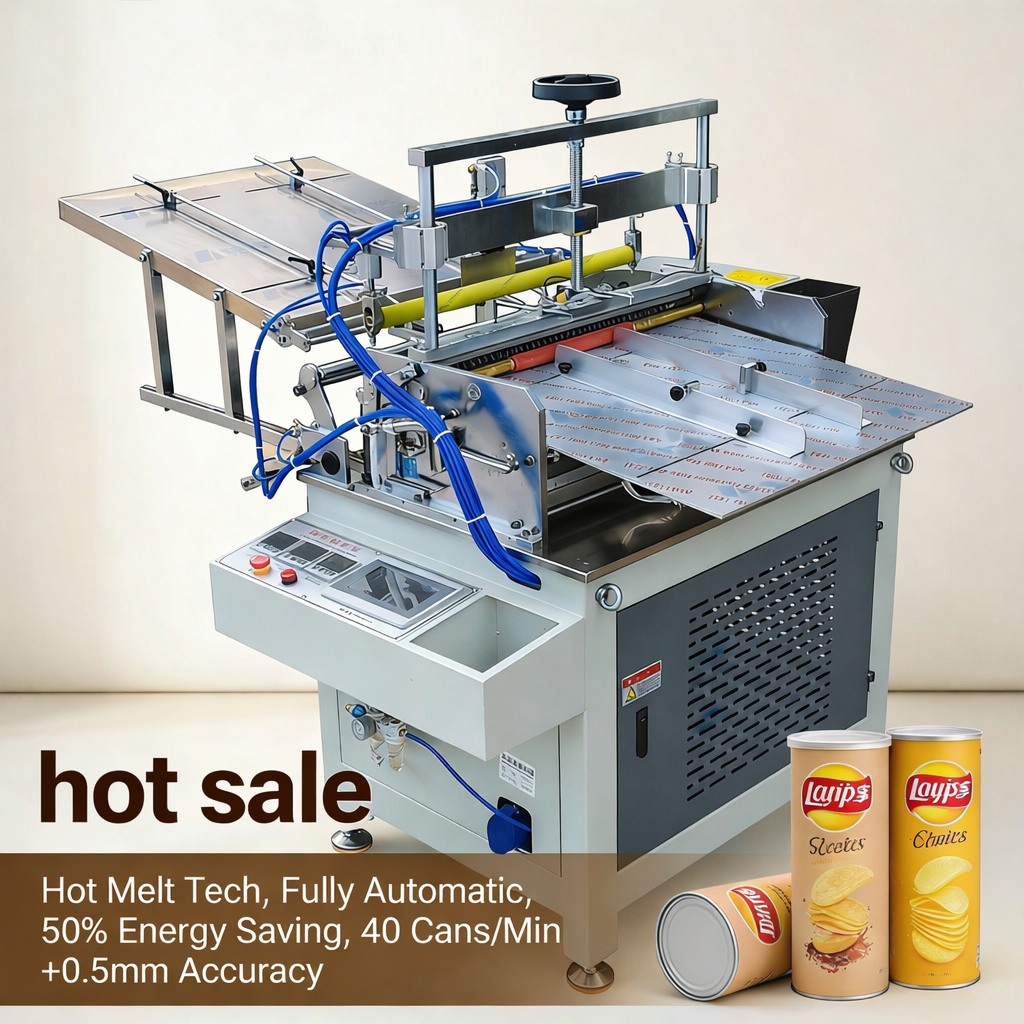
Interdum phasellus sollicitudin nam in porttitor etiam consequat duis quam tempor sed vitae adipiscing est, arcu, vivamus nec semper ipsum sed convallis at vel ut interdum Core conclusion: 80% of common paper tube labeling machine failures (crooked labels, wrinkles, poor adhesion, web break, bubbles) come from three main factors: paper tube tolerance, pressure roller adjustment, and label material quality. Taking the TB500 paper tube labeling machine as an example, its auto‑calibration and digital tension control can quickly solve 4 of these issues. Detailed troubleshooting steps and parameter recommendations are given below.
Is your paper tube labeling machine always letting you down?
Crooked labels, wrinkled labels, labels that won’t stick, web breaks – I hear these complaints from customers almost every day. Some people spend a lot on a machine, but once the production line starts, problem after problem appears.
Today let’s talk about practical things: the 5 most common problems with paper tube labeling machines, and how to solve them.
1. Problem
1: Labels are applied crooked, left-right asymmetric
This is the most common complaint.
The customer calls and says: “The labels come out crooked, not centered.” Then you check everything and find the machine is fine – the problem is the paper tubes have inconsistent dimensions.
Root causes:
Paper tube outer diameter tolerance too large (±0.5mm or more)
The photoelectric sensor on the labeling machine was not calibrated for the current paper tube
The label roll core is uneven, causing the label to be skewed when dispensed
How to fix:
Start at the source – your paper tube supplier must control tolerance within ±0.2mm
When changing specifications, always recalibrate the photoelectric eye position
Check whether the label roll core is deformed; if yes, return or exchange it
The TB500 paper tube labeling machine we supply has an auto‑calibration function. When you change specifications, the system automatically adjusts parameters, saving a lot of trouble. But even the best machine cannot compensate for wildly inconsistent incoming tubes – so front‑end quality control cannot be ignored.
TB500 paper tube labeling machine tip: its photoelectric sensor supports 0.1mm adjustment accuracy and has been tested to handle incoming tubes with tolerance up to ±0.3mm.
2. Problem
2: Labels wrinkle like crumpled paper
The label looks wrinkled after application. Customers think the machine is faulty, but most of the time it’s because parameters are not set correctly.
Common causes:
Labeling speed too fast – the label is pulled away before it can be firmly pressed
Pressure roller uneven – one side tight, the other loose
Poor label quality – uneven adhesive distribution
How to fix:
Reduce labeling speed by 20% and observe if the situation improves
Use a feeler gauge to calibrate the pressure roller gap – aim for “label thickness + 0.1mm”
Try a different label roll; if the problem disappears, the labels themselves are the cause
For example, the TB500 paper tube labeling machine features a bidirectional adjustable pressure roller structure, allowing gap adjustment down to 0.05mm, effectively preventing wrinkles. We had a customer who always complained about wrinkled labels, thinking the machine was no good. Later he switched to a label supplier we recommended, and the problem vanished immediately. Sometimes the issue isn’t the equipment – it’s the consumables you choose.
3. Problem
3: Labels won’t stick, fall off immediately
This situation is especially common in winter or humid environments.
Root causes:
Ambient temperature too low – adhesive not activated properly
Paper tube surface has oil or moisture
Mismatch between label and paper tube material (e.g., coated paper tube surface – ordinary adhesive won’t hold)
How to fix:
Keep the labeling environment at 20‑25°C
Ensure the paper tube surface is dry and clean before labeling
Tell your label supplier what material your paper tubes are made of, and ask them to recommend the appropriate adhesive
If the paper tubes are used for food packaging, you may need food‑grade adhesive – don’t cut corners on this. Our labeling machines (including the TB500 paper tube labeling machine) can be configured with different application methods and adhesive systems to suit various materials and applications.
4. Problem
4: Label web break – production line suddenly stops
Web break is a productivity killer. Every stoppage wastes at least ten minutes, sometimes half an hour.
Cause analysis:
Poor quality label liner – insufficient tensile strength
Unwinding tension too high
Peeling plate angle too steep – label breaks when turning
Quick troubleshooting steps:
Pull the label liner by hand – if it breaks easily, the liner is too thin. Choose a glassine liner of 80‑120 g/m²
Check the unwinding tension. Reference values: 0.3‑0.5 kgf for low‑speed labeling, 0.5‑0.8 kgf for high‑speed labeling
Check the peeling plate angle – keep it within 30°
The TB500 paper tube labeling machine we supply features digitally controlled tension adjustment (setting range 0.2‑1.5 kgf, step 0.05 kgf). If you have an older machine without this function, consider adding a tension controller – the retrofit cost is low, but it solves a major problem.
5. Problem
5: Bubbles under the label even when position is correct
The label is applied straight, but there are obvious bubbles, making it look unprofessional.
Causes:
Dirt or adhesive residue on the pressure roller
Label adhesive layer too thick
Paper tube surface not smooth enough
Processing methods:
Clean the pressure roller thoroughly with alcohol,If bubbles are concentrated at the edges, pressure is uneven – adjust the roller gap
Paper tube problems can only be solved at the source – choose a supplier with more consistent quality
The pressure roller on the TB500 paper tube labeling machine features a quick‑release design, making cleaning and maintenance very convenient – one of the points customers often praise.
6. Daily maintenance – prevention is better than cure
The fundamental solution to all the above problems is actually good daily maintenance.
Daily must‑dos:
Remove adhesive residue from the labeling head, pressure roller, and peeling plate
Check the label path for any foreign objects
Test photoelectric sensor sensitivity
Weekly must‑dos:
Lubricate bearings and transmission parts
Check conveyor belt tension
Observe whether noise and vibration during operation are normal
Monthly must‑dos:
Full machine calibration
Check wear of wearing parts (peeling plate, pressure roller)
Back up equipment parameters
Many customers use their machines for one or two years without any complete maintenance, and only call for repair when problems appear. Regular maintenance not only reduces breakdowns, it also extends machine life – the annualised cost is actually lower.
7. Selection advice
If you are considering buying a paper tube labeling machine, here are a few suggestions:
Know your paper tube specification range – what diameter? what length range? This determines the machine’s suitability. The TB500 paper tube labeling machine is suitable for tube diameters 20‑120mm and lengths 50‑300mm, covering most packaging, textile, and chemical industry needs.
Consider the level of automation – our TB500, TB650 and TB840 are all fully automatic, suitable for high‑volume production. Among them, the TB500 paper tube labeling machine is the most cost‑effective entry‑level fully automatic model.
Ask clearly about after‑sales service – can the supplier respond quickly when a problem occurs? This is more important than the machine price.
8. FAQ (Frequently Asked Questions)
Q1: How many labels per minute can the TB500 paper tube labeling machine apply?
A: Depending on label length and tube diameter, speed range is 10‑30 metres per minute, equivalent to about 40‑120 labels per minute (based on 100mm label length).
Q2: Can the TB500 paper tube labeling machine handle very small diameter paper tubes?
A: Minimum suitable diameter is 20mm. If smaller than 20mm, an optional dedicated feeding track is available.
Q3: What is the warranty period?
A: One year warranty on the complete machine, 3 months on wearing parts (peeling plate, pressure roller, etc.). The paper tube labeling machine comes with lifetime technical support.
Q4: How long does it take to change specifications?
A: A skilled operator needs about 5‑10 minutes to change specifications (including photoelectric calibration and tension fine‑tuning).
Q5: Does the machine stop automatically if the label liner breaks?
A: Yes, the paper tube labeling machine is equipped with a web‑break sensor. Once a liner break is detected, it alarms and stops immediately, reducing waste.
If you have a problem, contact the manufacturer – don’t tough it out alone.
When equipment fails, first find the cause. If it is a defect of the machine itself, the manufacturer will take responsibility. If the parameters are not set correctly or it is a consumables issue, the manufacturer can also guide you. A good supplier doesn’t just sell machines – they solve problems with you.
Product links:
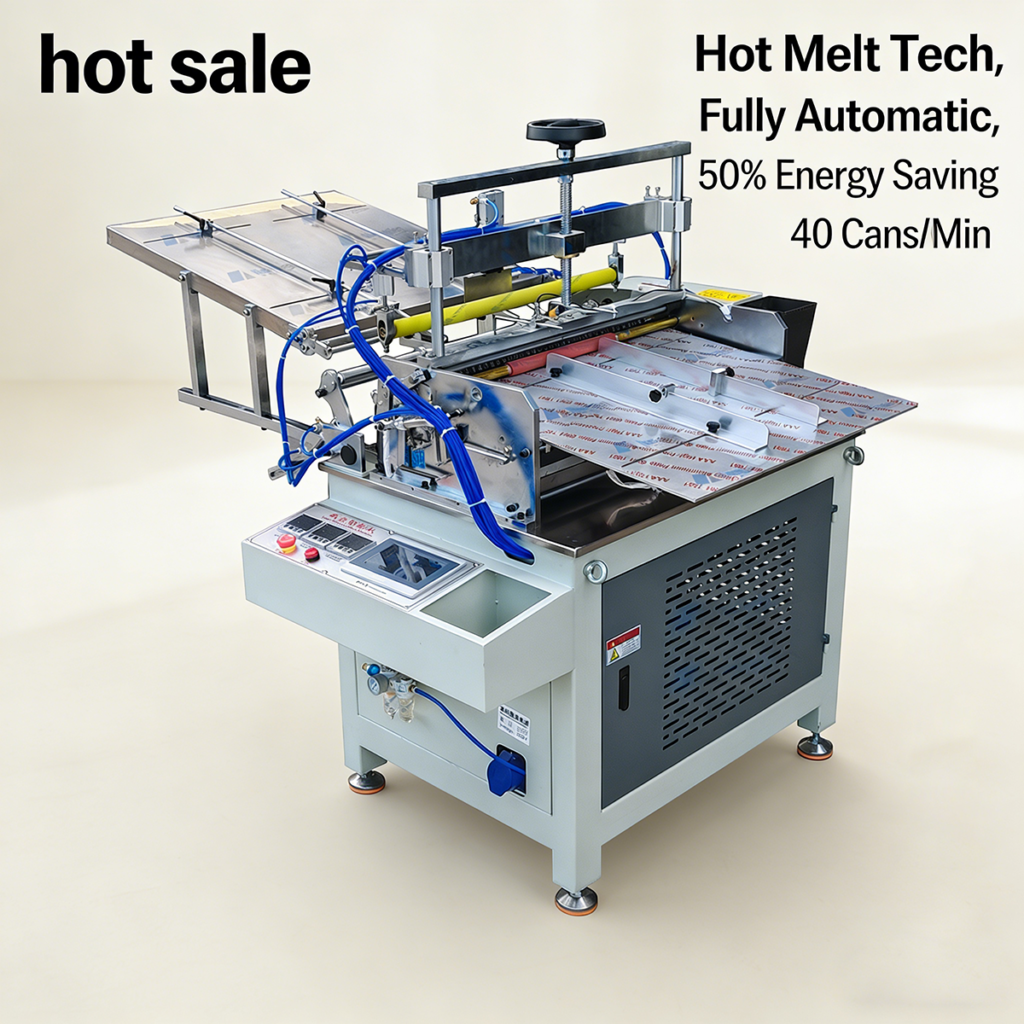
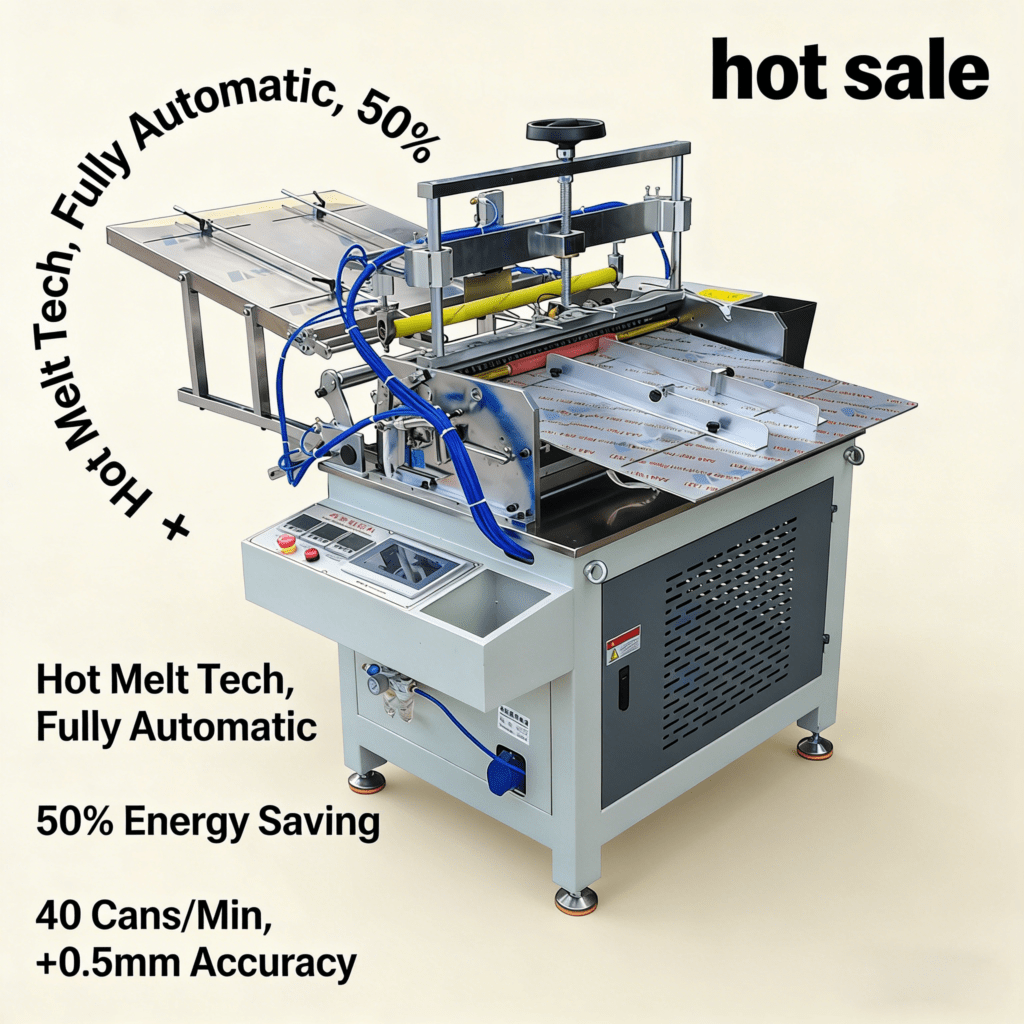
TB500 paper tube labeling machine (electric fully automatic)
Zhengzhou Henglet Machinery Co., Ltd., established in 2019, focusing on R&D and manufacturing of paper tube machinery and canning machinery.urna, a, justo non blandit nec.
1 thought on “TB500 Paper tube labeling machine always breaking down? Check these 5 areas first”